Written by Black Feather senior guides Dana Sykora, Shayna Herr and Wendy Grater
I often ask folks what they think is critical to a successful and comfortable wilderness trip. Some might say ‘the people’, others might say ‘the location’, or a final group, ‘the weather’. However, I find if I am dry, then I am happy. Learning how to preserve dryness is a skill that you can learn. It takes a little effort and attention to detail, but is very worth it in the long run. We’ve asked a few of Black Feather’s senior guides to give a their favourite pointers on staying dry. Thanks to Shayna Herr, Dana Sykora and Wendy Grater for these tips.
Hiking trips
Sometimes on hiking trips you feel like you are living in wetness. Your house and everything is on your back and you can feel like you’re a drowned rat. Hopefully these points should help eliminate that feeling!
1. Sweat Management & Layer Control
Wetness from sweat is just as important to manage as wetness from rain, especially in colder environments. Our overall goal should be to regulate our body temperature so moisture never builds up in the first place – be bold and start cold, vent early, and adjust layers before you overheat, because it’s far easier to stay dry than to dry out once you’re wet (or damp from sweating). As soon as you stop moving, add a warm layer to trap heat. Layer material choice matters. Quick-drying fabrics like merino wool, fleece, and synthetics work best because they still insulate when damp. Cotton is not your friend; if it gets wet, it dries very slowly.
2. Keep Rain Gear Handy
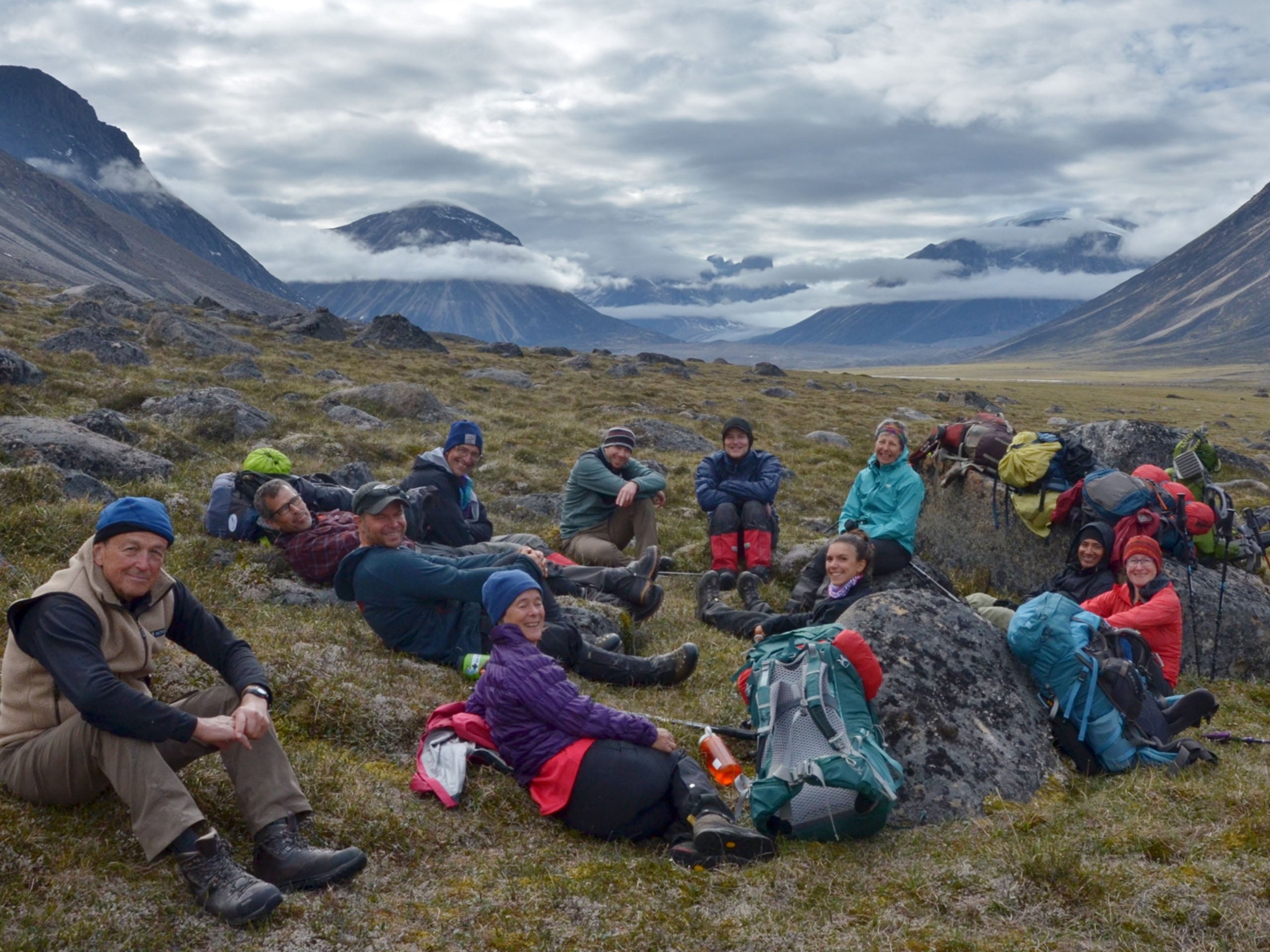
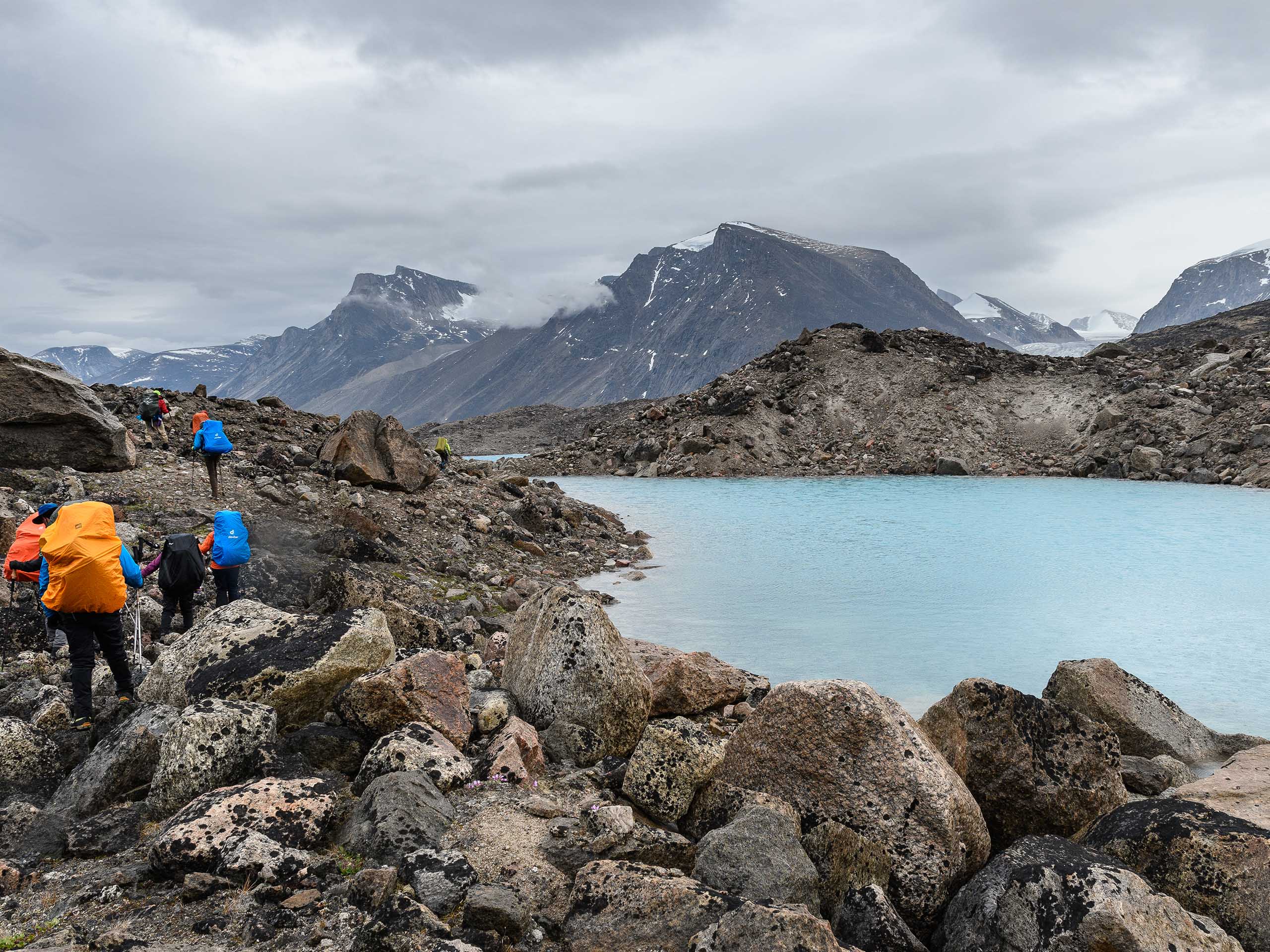
Keep your pack cover in an outer pocket and your rain gear easily accessible. Weather in the high Arctic can shift in minutes, and you don’t want to get soaked because you were digging for your jacket. A good shell does more than block rain – it cuts wind and helps keep your insulating layers effective as conditions change.
3. Protect Your Feet
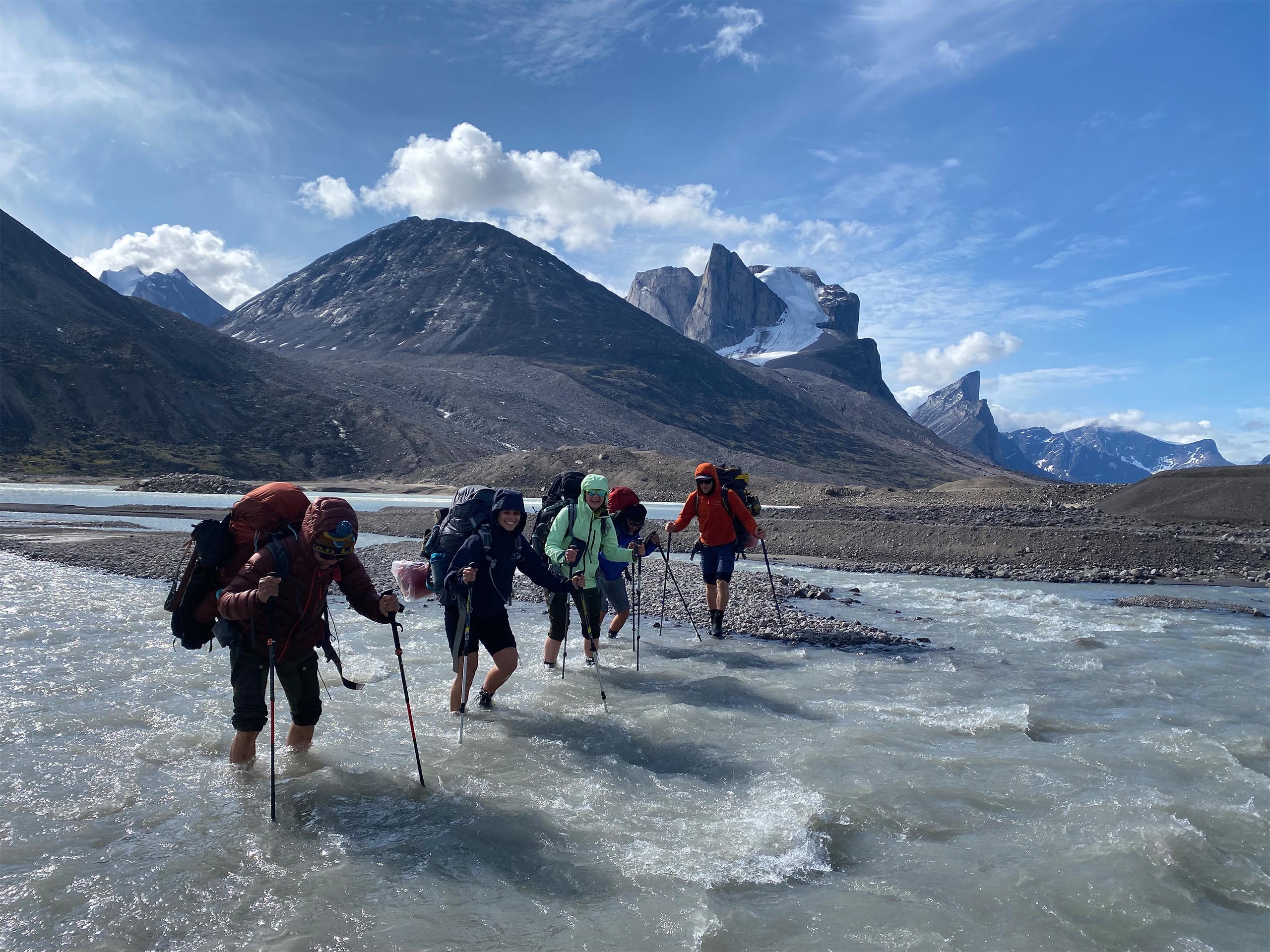
Waterproof boots + merino wool socks + gaiters is a winning combo. Keep your feet dry, and the rest of your body will be much happier. If you’re debating whether a stream crossing is jumpable… don’t do it! Wet feet are tricky to recover from.
4. Waterproof What Matters
Compression dry bags are great for keeping your sleeping bag and clothing dry while also saving space in your pack. Ziploc bags are honestly a super easy, inexpensive, lightweight backup – they’re perfect as a second waterproof layer for important items, for keeping things organized inside your dry bag, or even for lower-priority things like toiletries.
5. Be Disciplined at Camp
Have a system: dry camp socks, dry sleep clothes, no exceptions. Camp is where you protect the dryness you have. Even when you’re exhausted, change layers. Don’t sleep in that “seemingly dry” hiking top you’ve been wearing all day. Looping us back to point #1, this is why your layers matter so much… you only have so many on trip. Those few extra minutes of care at camp can make a big difference in how dry, warm, and comfy you feel as your adventure continues!
Paddling Trips
Whether by canoe or sea kayak, a paddling trip is, by definition, somewhat wet. You are around and on water constantly. But, that doesn’t mean that YOU have to be constantly wet. Here are some ‘tips’ that are useful, even if you don’t tip!
1. Make sure your zippers are done up!
We know the feeling. You’re gearing up for the day, thinking about the rapids you’re going to run and looking forward to getting into it. Maybe you’re in a bit of a hurry, or your mind is distracted. You zip up your paddling suit, jump into your canoe, and head downstream. It’s maybe not until you find yourself in an out-of-boat experience later that you realize in your haste you left your zipper a little undone. You feel that trickle of water that tells you that you missed the last pull that really locks it in place! It’s happened to me many times before, particularly when I’m in a hurry in the morning, or after a lunch break on the river. My recommendation? Get a buddy to double check you, just like you get one to double check that your PFDs are all done up before hitting the water. That last centimetre really makes all the difference between staying dry or damp in your paddling suit.
2. Keep your bags and barrels closed and/or under tarps and tents
It can sometimes feel like a tedious practice but getting into the habit of closing up your drybag or barrel each time you walk away from it is a professional secret of successful camping. You can always tell who has been caught in an unexpected weather event – a rainstorm, snow, blowing sand or wind – by how secure they leave their gear, even when just around camp. Things can blow in unexpectedly, and an open drybag or barrel is no longer dry, it is simply a large bucket to collect water. We call it “stormproofing,” and it’s a fine art to keep the precious few things we carry dry for when we need them most.
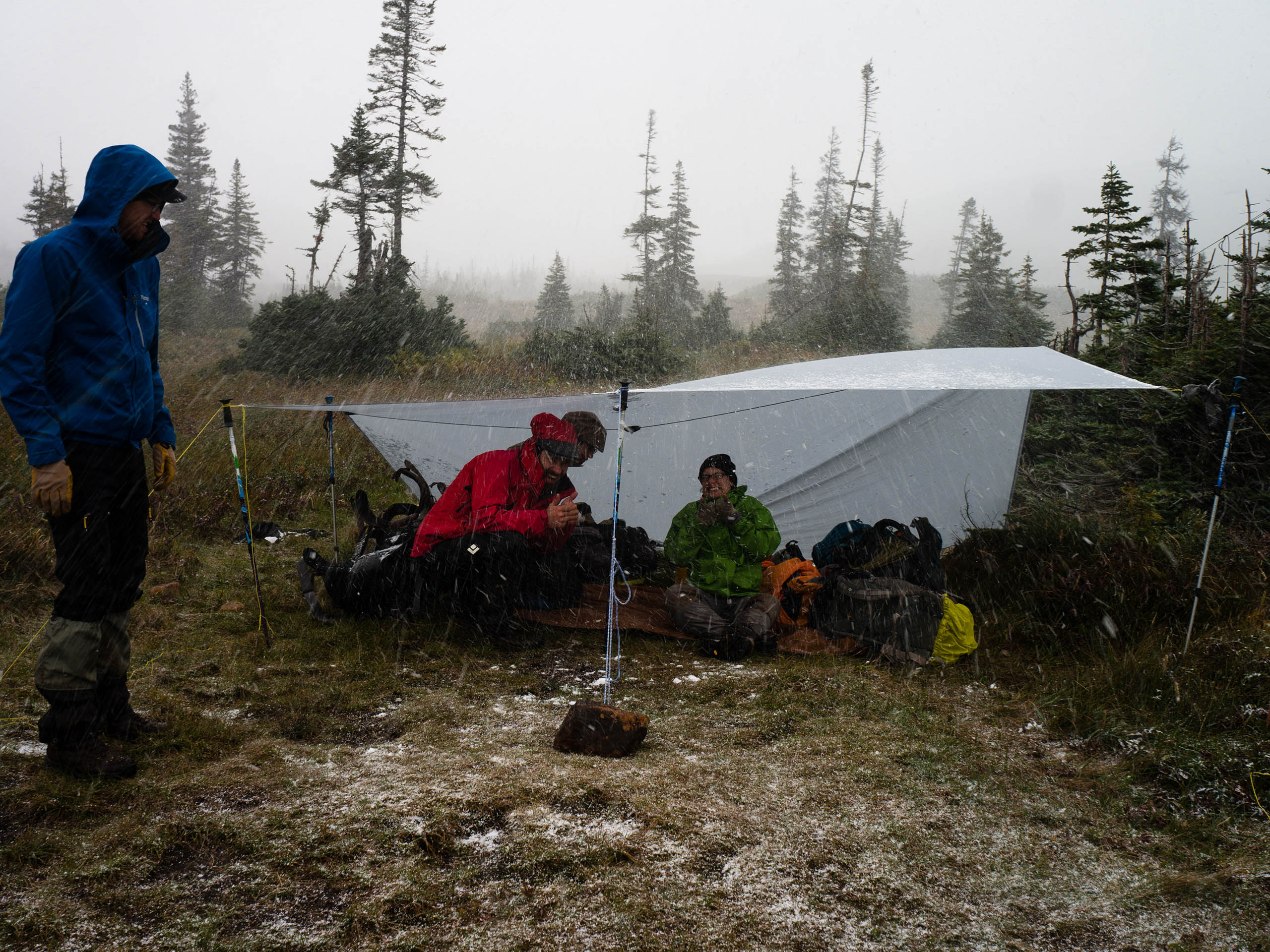
3. Invest in some good rain gear
It’s important to know the environment in which you’ll be travelling, and the weather that you might run into. Some places we work are a lot warmer than others, some are colder, some are drier, and some tend to be a lot wetter. Anticipating the gear that you need and choosing whether or not to invest in higher quality items is something that could possibly make or break a trip depending on how wet and cold you expect to be. And it’s important to remember that not all raingear is created equal. While nothing is completely waterproof forever (aside from some full plastic brands that don’t breathe, leaving you sweating and wet from the inside anyways!), some will keep you drier for longer periods of time. Take the time to do your research and read multiple reviews from customers who are doing similar activities to the trip you are about to do. Keep in mind too, the most expensive options are not always the best.
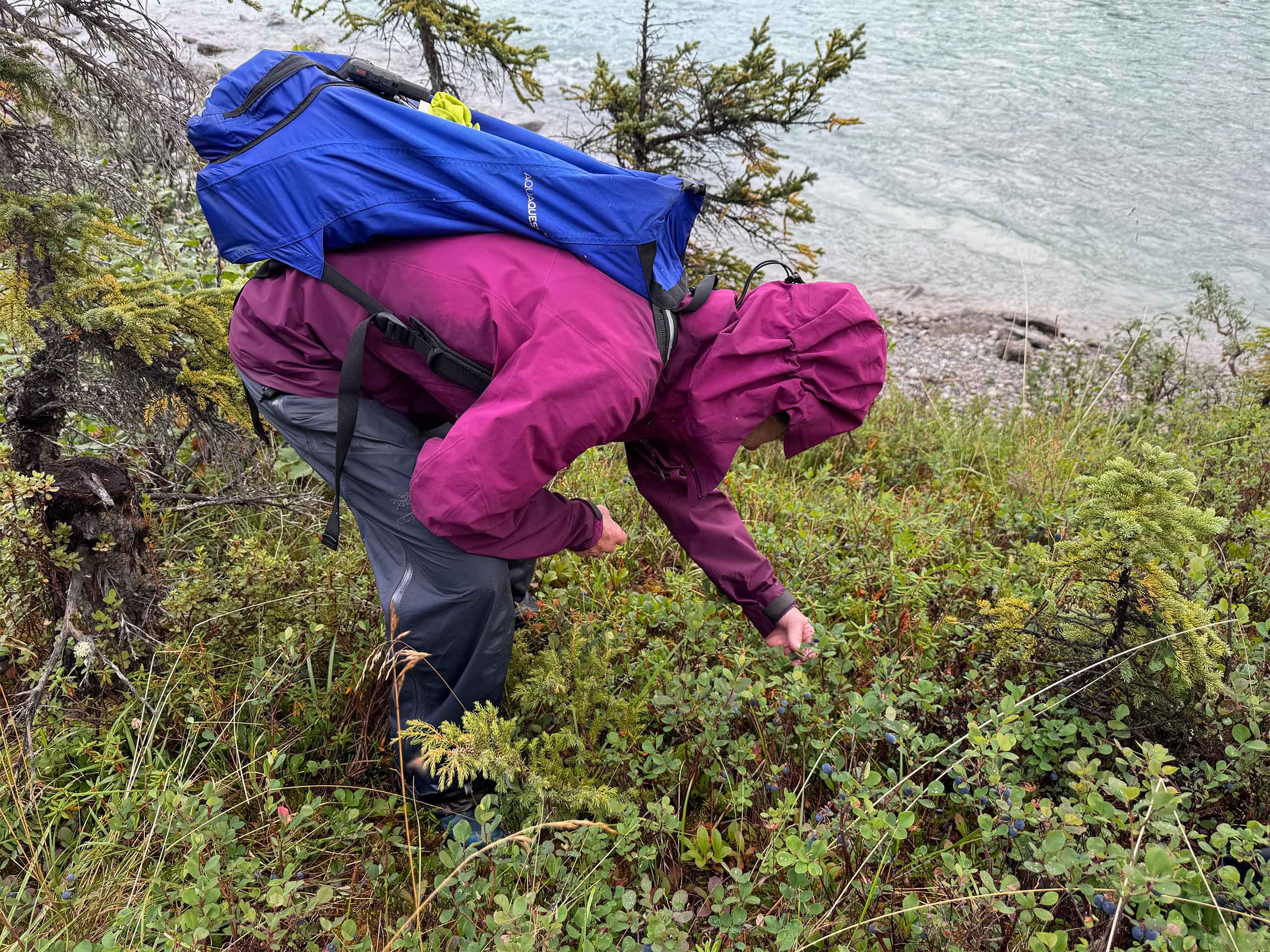
4. Remember the layers you have are the only layers you have, so don’t let them get wet
I love travelling in the backcountry for so many reasons. And one of the ones that I have come to truly appreciate over the years is that we travel with minimum gear and minimum clothing. At home I have multiple options to choose from each day, whereas out there I have one or maybe two. This not only takes away the need to choose what I wear each day (aside from dressing for the weather), but it also teaches me to take exceptional care of the little I have. When things get wet, I often can’t change into something else, and there are limited options for drying clothes on a river. I can’t rely on a sunny day when there might not be any, or a heat wave that may never come. So, I’m conservative. On the river, I have my drysuit to keep me dry. In camp, my rain layers are always handy no matter where I am, so that if I anticipate weather rolling in, or feel a drop, I can put it on right away and ensure my precious layers stay dry. Keep in mind that the weather changes quickly in the north, and particularly in the mountains, and can last for days. My rain gear is my constant companion.
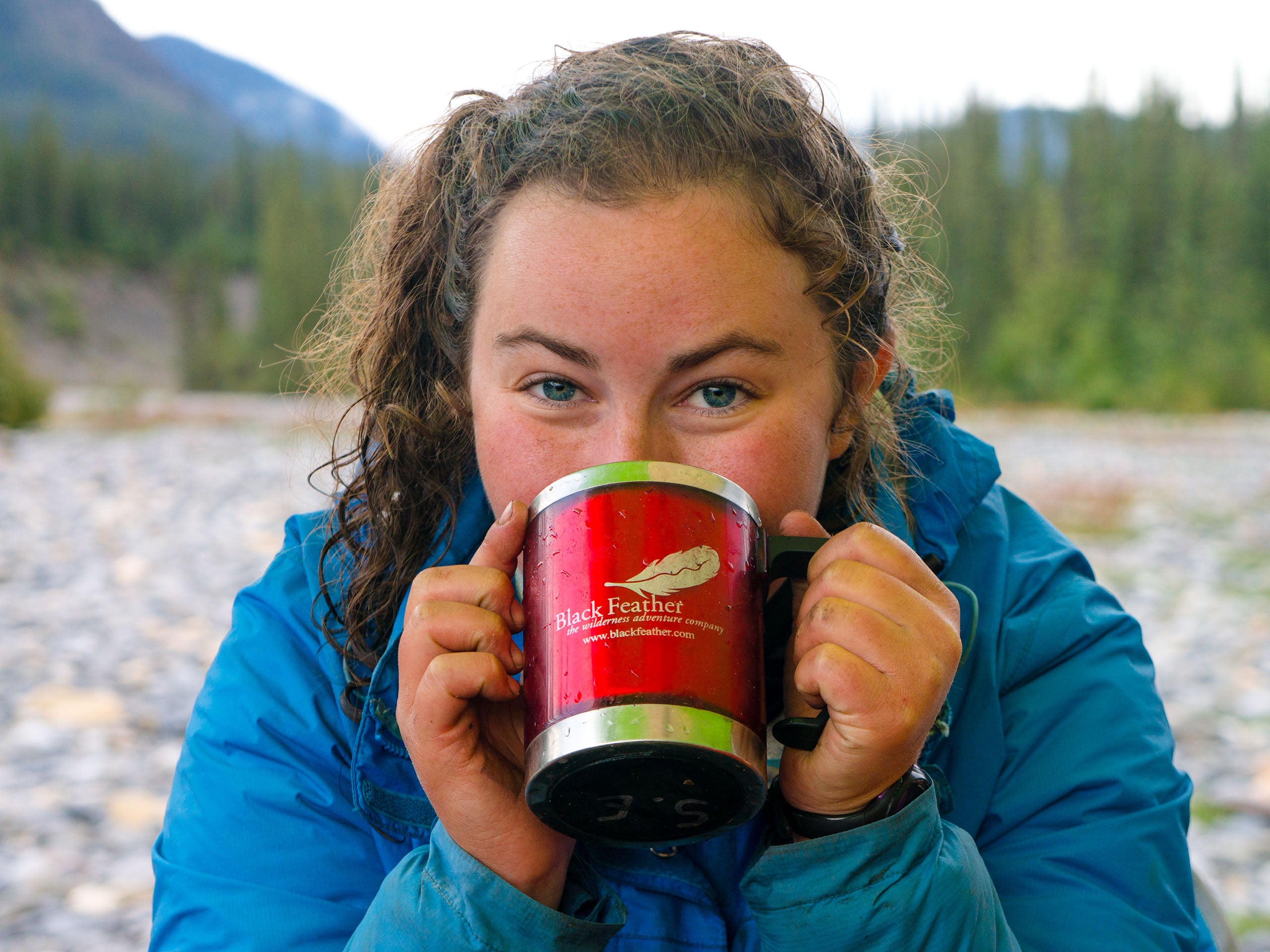
5. Waterproof inside your barrels!
For river travel, those big blue barrels are the best. They’re sturdy, they’re easy to pack into a canoe, they make a great camp chair, and they’re usually dry. Like everything, nothing is guaranteed to last forever, and sometimes a barrel (or a dry bag, for that matter) can spring a leak, whether it be from a loose metal ring, a missing O-ring, an ill-fitting lid, or simply a small hole somewhere that is as of yet undetected. I’ve been caught before with an unexpected leak, and it’s taught me to pack very conservatively. The gear I absolutely rely on staying dry (my sleeping bag, electronics, paperwork, books…) are all waterproofed inside my barrel, whether in specific dry bags, or simply in sealed plastic bags. Sleeping pads dry quickly, hats won’t bother me too much if wet, toiletries spend half their life damp anyways. So those things stay loose. But the items that are essential to keep as dry as possible, those are the things that get a little extra for redundancy!
6. Embrace the wet.
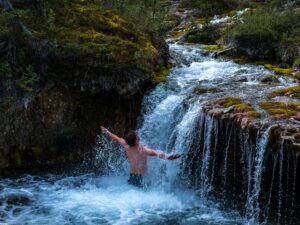
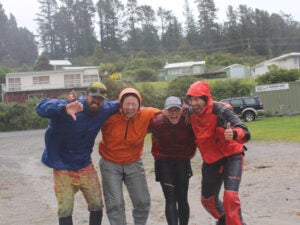
Sometimes, no matter what you do, you just have a wet trip. Rain, snow, small glimpses of sunshine before more rain. No matter what we hope for, Mother Nature often just has different plans. It can definitely wear on the spirit, but if I’m being honest, the trips that stick with me the most are usually the ones that weren’t just bluebird skies all day every day. The ones where the rain fell, and we banded together to endure it. We need a little moisture sometimes to shake things up, and to remind ourselves that we can survive – and thrive – in any condition out there. So, embrace the wet, know that you will be dry again one day, and know too that when you look back, you’ll be darn proud of what you accomplished in the rain.
General Camp Tips
1. Take care of your tent
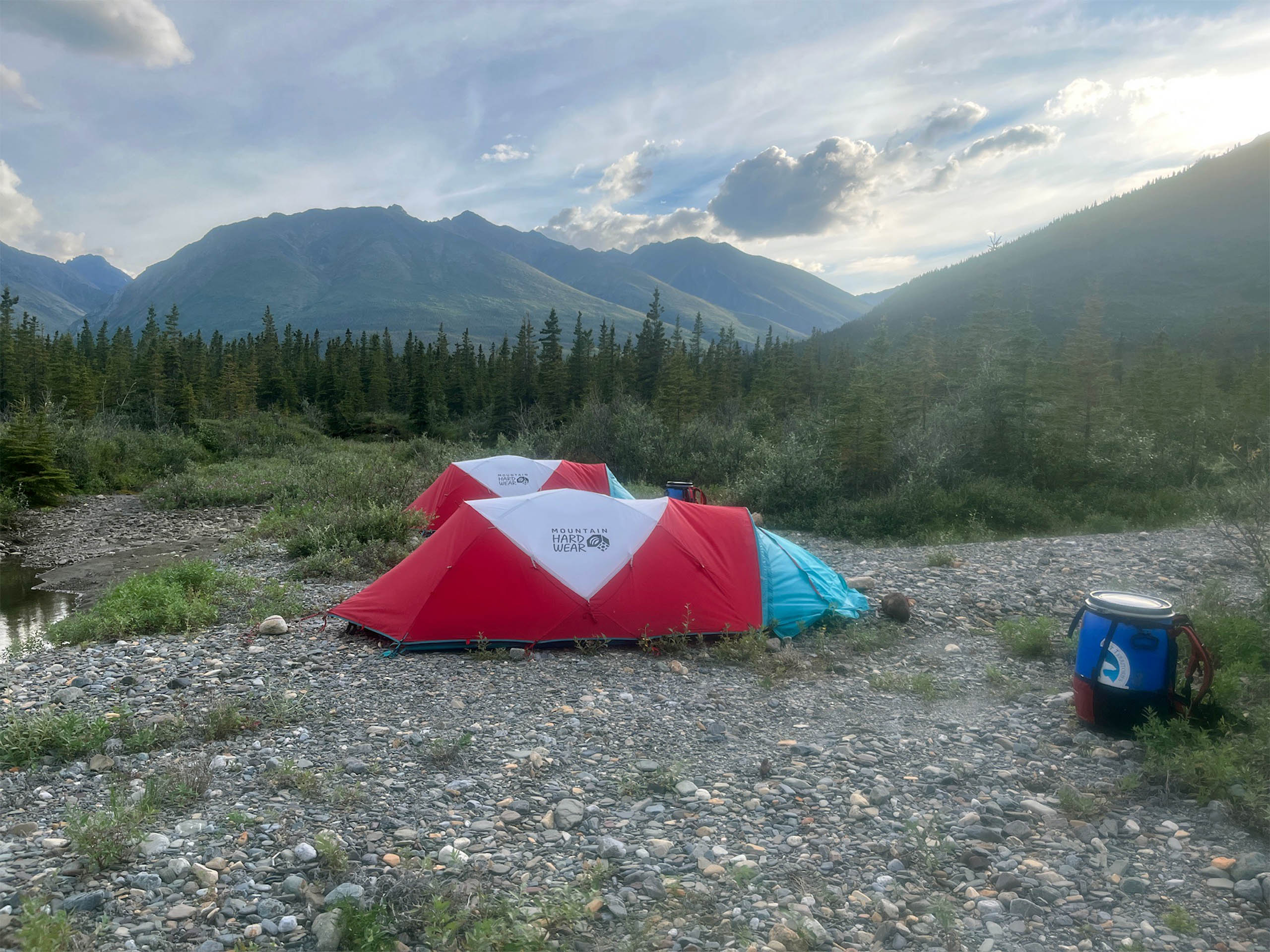
Your tent is your safe haven for the night. Take care while choosing your tent site. Make sure that you are not in a hollow (which can become a little lake in a good rainstorm). Choose well-drained ground … small pebbles drain better than sand or mud. Peg (and rock*) out your tent with those guy-lines so that the tent fly is taut. If it starts to rain, revisit your tent and tighten those lines as the material stretches when damp. Think about facing the back of the tent into the wind, so you don’t have the wind driving rain into your door. Finally, when packing it up, try to keep ‘wet with wet’ and the drier part of the tent dry!
*Note, when using rocks to anchor the guy lines, my rule is that the rock should be at least as big as your head. If it is smaller, you need numerous rocks to add up to the size of your head. If not, you may get blown away!
2. Take care of your head
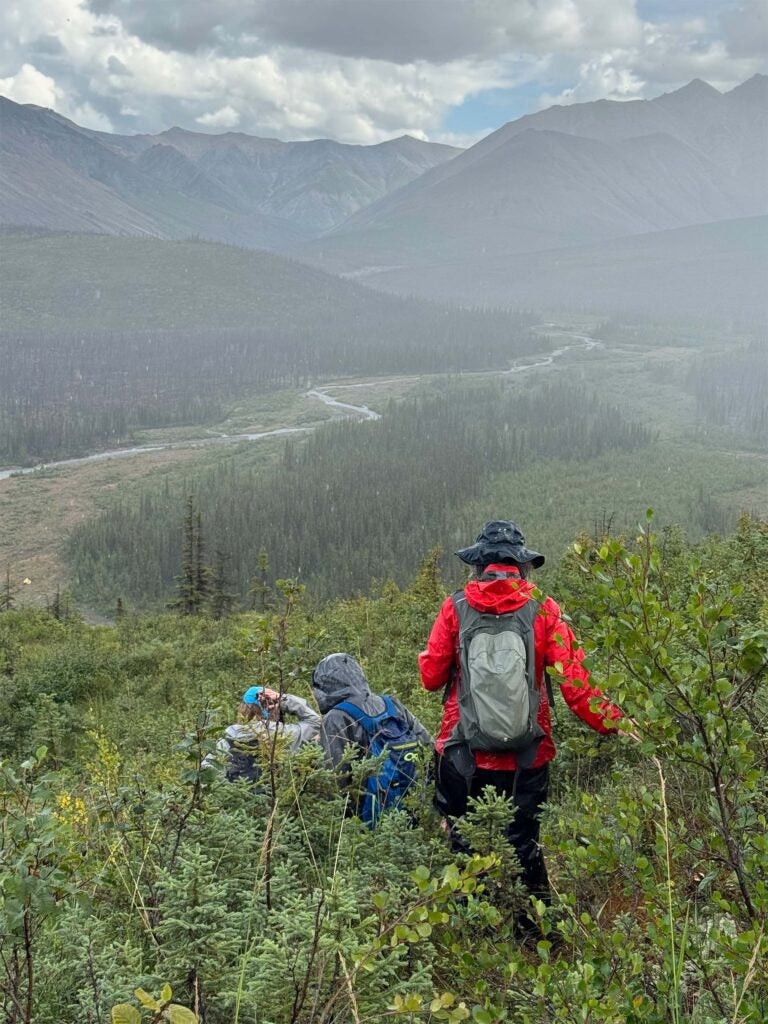
I love my Kokatat Nor-Wester. This is a geeky looking goretex hat that has a wide brim which extends over the back. This keeps your hair relatively dry and prevents rain from dribbling down your neck. If you buy one, get one large enough to put a thin toque (warm hat) inside it, for those cold and damp days. The other option is the hood of your rain jacket … keep it up and tightened so that the wind doesn’t blow it off! And if you’re wearing your rain jacket, consider wearing a ball cap with a brim underneath to protect your eyes from the rain and keep it off of your face even more.
3. Take care of your feet
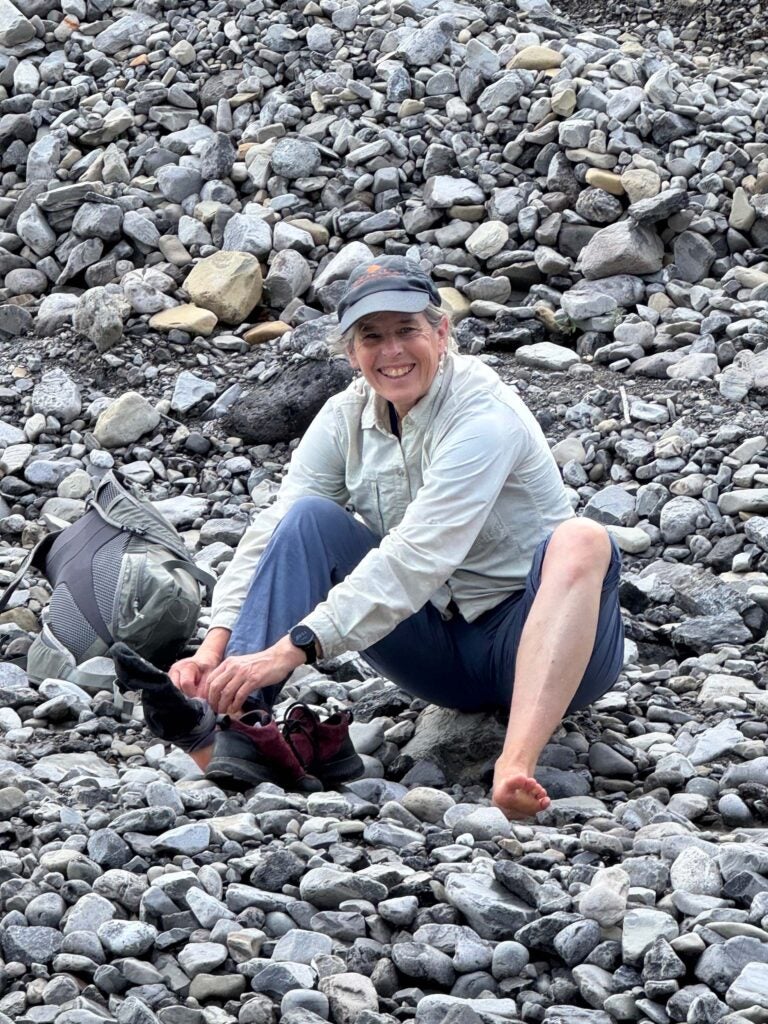
When you are paddling or hiking you are wearing the appropriate footwear for that activity. However, around camp, you may want to consider something that will keep your feet dry and toasty. On canoe and kayak trips, you may notice some of your guides wearing rubber boots. There are lightweight, foldable rubber boots available that keep you dry at camp, yet can fold or roll up for transport in your barrel or kayak. If your feet tend to sweat, adding a pair of bama socks will help move moisture away from your feet inside the boot. Alternatively, a pair of ‘camp shoes’ which have a goretex lining will also help keep the damp at bay. I like to always keep a pair of sleeping socks with my sleeping bag, so that I know that I always have a dry pair socks at the very end of the day.
4. Watch the sky
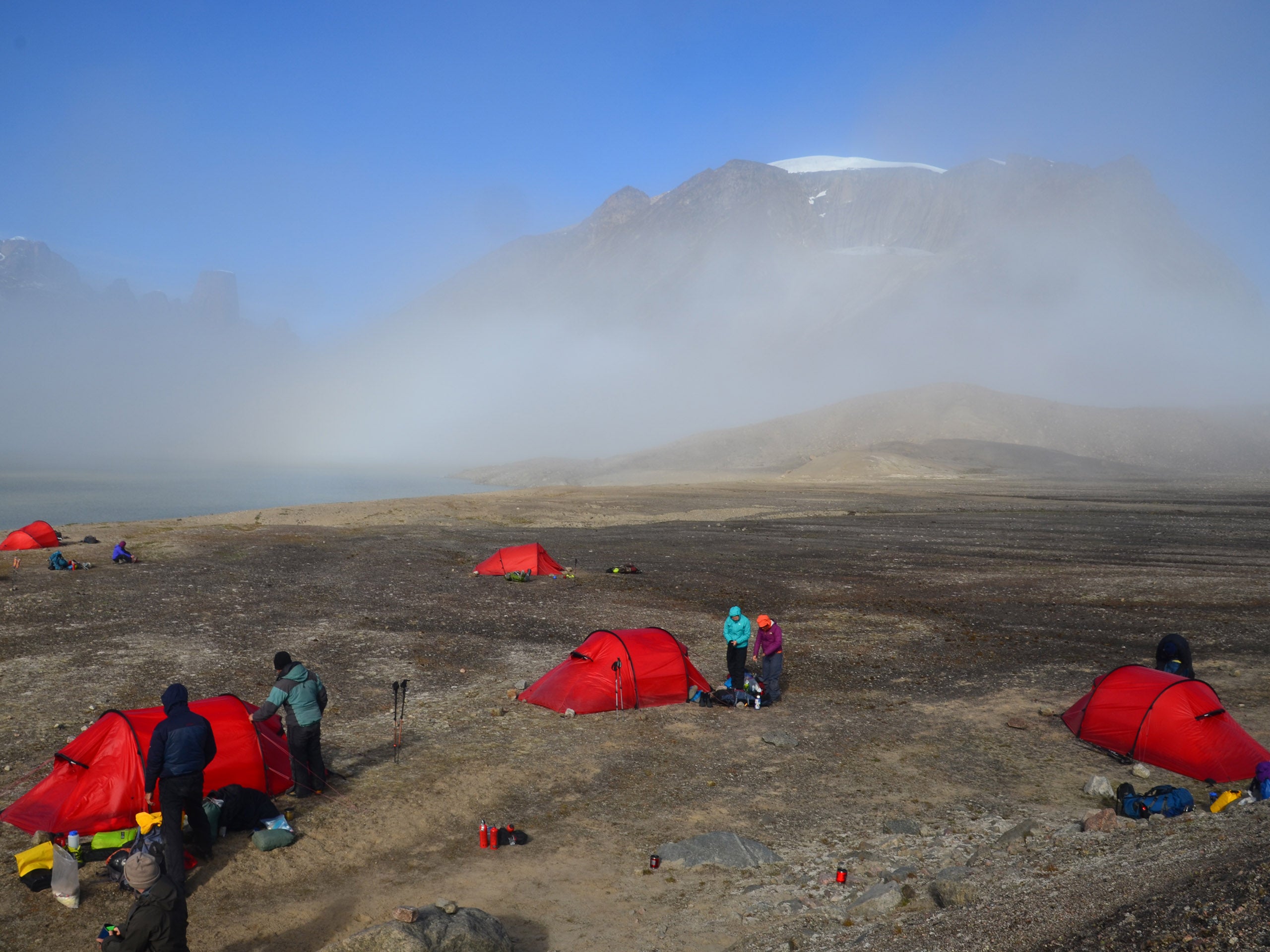
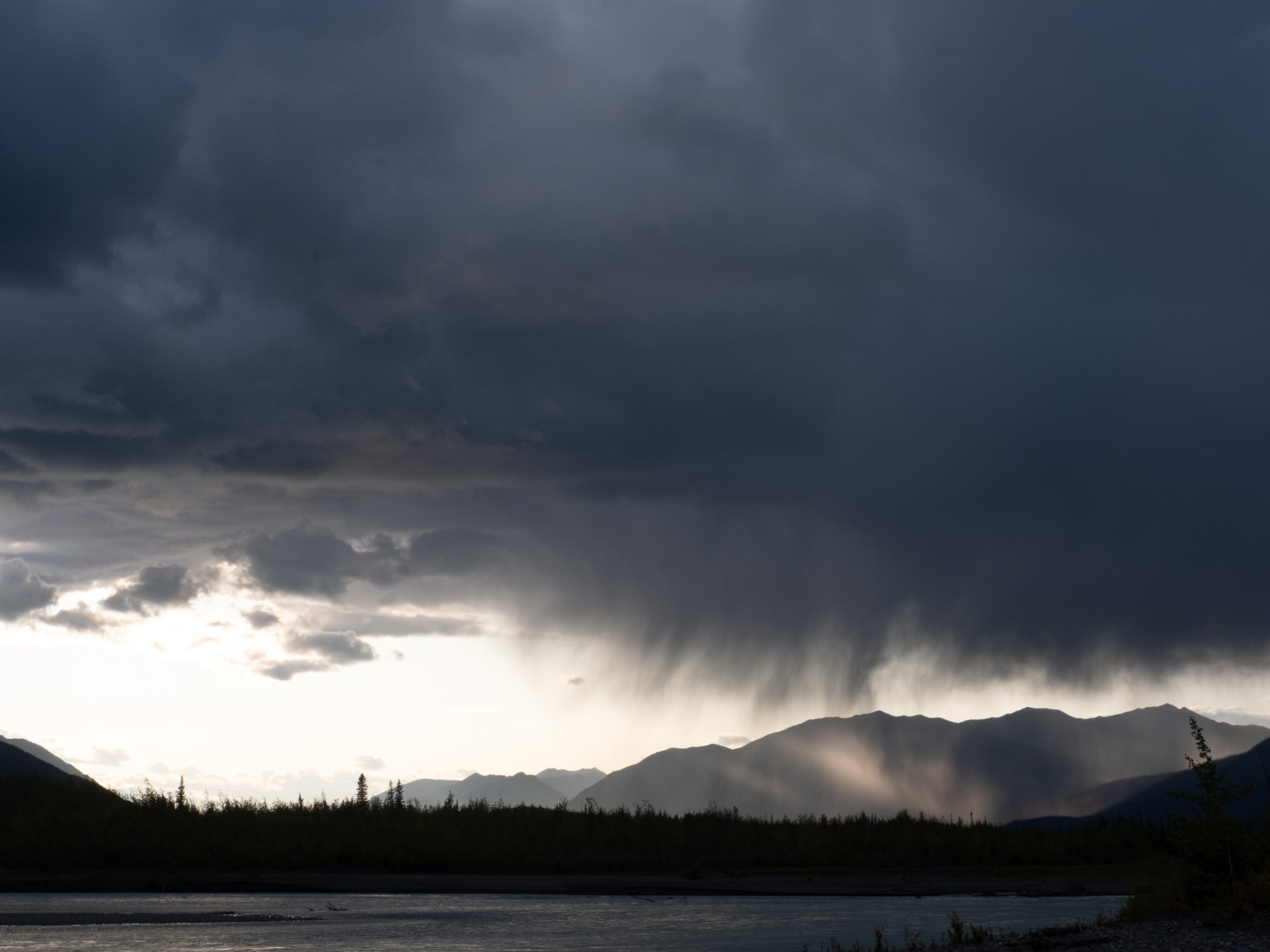
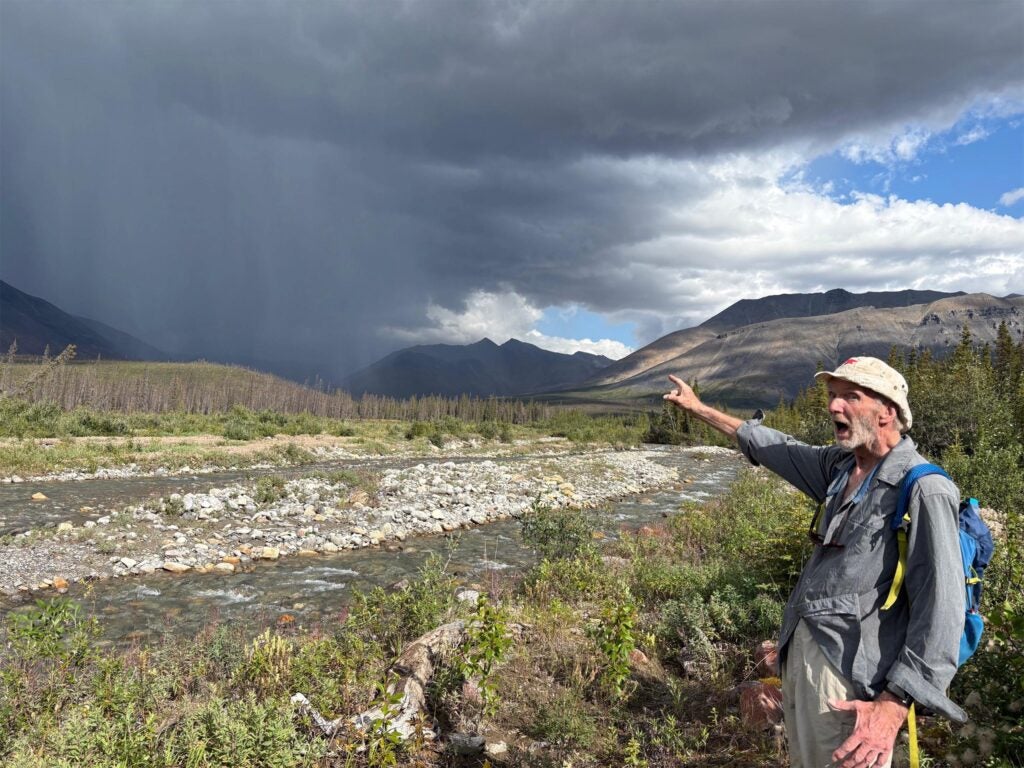
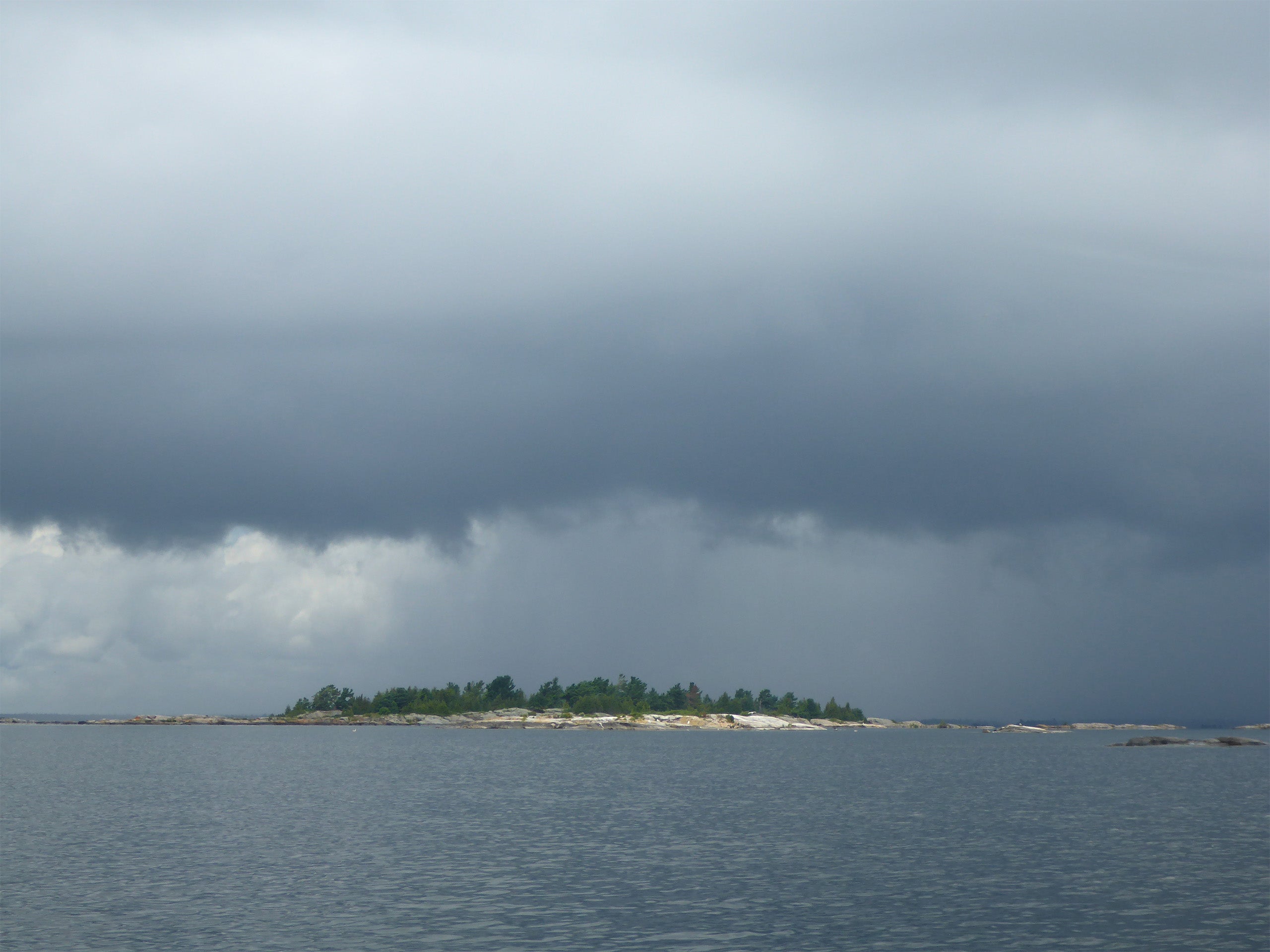
Keeping an eye on the sky can help you make a good decision about your clothing and gear. If you see dark clouds building, it is likely that some wetness will arrive. Get ready ahead of time, so that you’re not caught with your rain suit packed away or out of reach!
Dreaming of a place to test your ability to stay dry on an outdoor adventure with Black Feather? Whether you love the feeling of dipping your paddle into a lake or river or moving across the land by foot, we have a trip that fits the bill. Close to home or farther afield, we offer introductory to advanced skill level courses and expeditions – get in touch so we can find the right one for you!
Interested in hiking? From an introduction to backpacking held in Ontario in early fall, timed for the start of the fall colours and no bugs, to reaching the top of the world in Canada’s most northerly National Park – Quttinirpaaq – on our Ad Astra hike on Ellesmere Island, there is something available for everyone. Cross the visually stunning Akshayak Pass on our Auyuittuq Traverse, or just dip a toe for a shorter trip in the south side of the Park on our Auyuittuq Quick Escape trip, both on Baffin Island. The land awaits.
Or how about canoeing? We have been paddling on the Nahanni River, the first UNESCO World Heritage Site, since 1976 and have a myriad of options that allow any skill level of paddler to find their fill. Or perhaps a gem-coloured paddle and float down the Wind River in the Yukon, a beginner friendly descent with fantastic scenery and majestic mountains. Or something farther north, in the Barrenlands – perhaps on the Coppermine River or the Hood River. We canoe and raft the Coppermine all the way to the Arctic ocean… is this is the trip for you? All of this is just the start of an amazing list of options!
And sea kayaking? From a 2-day introduction to paddling to a week-long adventure getaway, our trips on Georgian Bay are sure to please, with warm water, 10,000 islands to hop between and paddle through, and sunsets that blaze in reds and oranges. Or go farther afield and find a trip in Greenland or Canada’s high Arctic, where you can paddle with icebergs and dip your blade into a northern ocean, taking you back centuries if not millenia following the strokes of the ancient Arctic peoples who also moved on and lived off of the bounty of the water.
Get in touch with us if you have questions or would like to book! And good luck keeping dry out there!